The video showcases a variety of home hacks that can be used to improve the efficiency and functionality of a home. In this article, we will explore some of the most popular home hacks shared by @annalouisaathome2284.
Home Hacks for a More Efficient Home
Introduction
In today’s fast-paced world, it’s easy to get caught up in the hustle and bustle of daily life. However, maintaining a clutter-free and organized home can be a challenge.
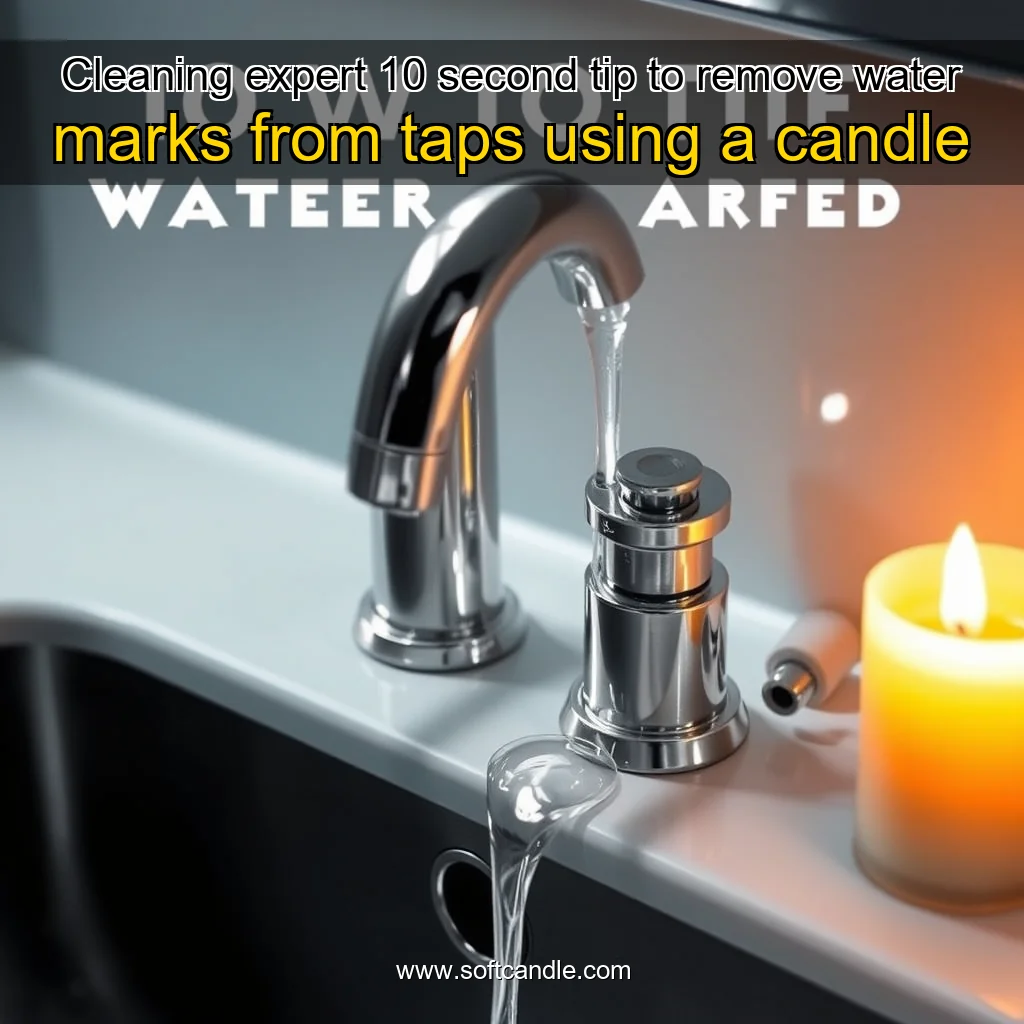
This method is said to remove any stubborn stains and leave your taps looking like new.
Tips for a Sparkling Clean Bathroom
Removing Stubborn Stains
Mary Berry’s method for removing stubborn stains from bathroom taps is a simple yet effective technique. Here are some additional tips to help you achieve a sparkling clean bathroom:
The Science Behind the Method
How Candle Wax Works
Candle wax is a natural wax that is often used in cleaning products. It is a gentle and non-toxic substance that can help remove stubborn stains and grime from surfaces. When you pour candle wax onto your tap, it dissolves the grime and stains, leaving your tap looking like new. The wax is absorbed into the surface of the tap, breaking down the grime and stains. The wax is then rinsed off with warm water, leaving your tap looking clean and shiny.*
Tips for Using Candle Wax on Your Bathroom Taps
Preparing Your Tap
Before using candle wax on your tap, make sure to clean the area thoroughly. Use a gentle cleanser and a soft cloth to remove any dirt or grime.
This layer prevents water from penetrating the surface of the tap, reducing the risk of mineral deposits and limescale buildup.
The Science Behind the Magic
Candle wax, a common household item, has been found to have a surprising effect on tap water.
The Science Behind Water Repellency
Water beads up and rolls off a surface due to the unique properties of candle wax. This phenomenon is known as the “lotus effect,” named after the lotus flower, which has a natural water-repelling surface.
Both are made from a combination of natural and synthetic materials, and both have been used for centuries to clean and protect surfaces. However, unlike metal polish, candle wax is a solid, non-toxic, and biodegradable substance that can be used for a variety of purposes beyond just cleaning and protecting surfaces.
The Origins of Candle Wax
Candle wax has been used for thousands of years, with evidence of its use dating back to ancient civilizations in Egypt, Greece, and Rome. The earliest known forms of candle wax were made from animal fat and plant-based materials such as beeswax and tallow. These early waxes were used for lighting purposes, but they also had other uses, such as waterproofing and preserving food.
Types of Candle Wax
There are several types of candle wax, each with its own unique characteristics and uses. Some of the most common types of candle wax include: